
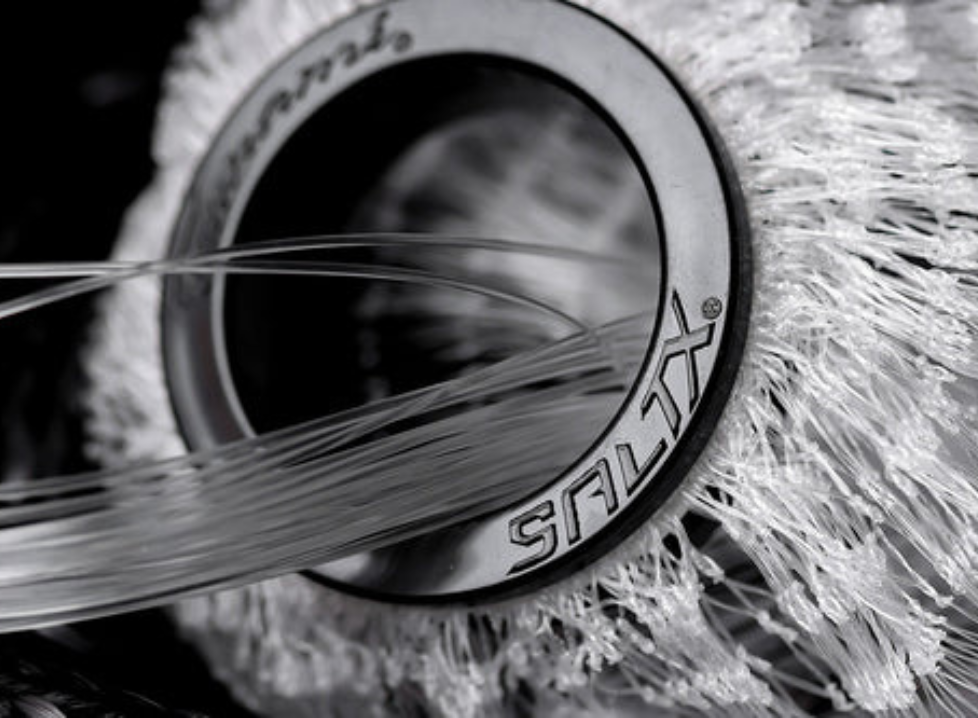
If there’s one skill every saltwater angler should learn, it’s how to throw a cast net. For Joey Antonelli, it’s not just a technique—it’s a way of life. In one of his latest how-to videos, Joey walks viewers through the fundamentals of using a cast net and shows exactly why the new SaltX 12’ 3/8” mesh net has become his go-to for catching live bait.
Joey makes it clear from the start: live bait gives you an edge. And if you want the best, you often have to catch it yourself. In this case, he’s after threadfins, a favorite bait for inshore targets like snook. Armed with the SaltX net and using a triple-load method, Joey demonstrates his cast from start to finish—coiling the handline, loading the lead, placing the net over his forearm, and fanning the mesh over his knee to build a clean, controlled throw. “The more you do it, the easier it gets,” he says, breaking down each move with simple explanations.
The SaltX Cast Net Joey uses is no joke. It’s a 12-foot radius net—meaning a full 24-foot spread—and weighs 1.5 pounds per foot, which gives it the right amount of sink rate without being too exhausting to throw. That weight and size help Joey work efficiently. “I don’t like to throw all day,” he admits. “I want to be one and done.” With one solid toss, he hauls in more than enough threadfins for the beach mission ahead.
The SaltX net isn’t just about size. It’s built for performance in real fishing conditions. The lead line drops fast, the mesh opens wide, and the horn design makes for smooth deployment and retrieval. Once Joey has what he needs, he throws back what he doesn’t, loads the bait into his livewell, and hits the road.
The key to Joey’s success with a heavy net like this lies in his loading technique. His triple-load method gives him control over the entire net, allowing it to open fully without tangling. He starts by coiling the handline in his non-dominant hand, then grabs the horn and lets the net stretch out. From there, he splits the net into three even sections. The first third is pulled up into the hand with the horn, the second third is grabbed slightly lower and added to the same hand, and the final third is picked up around waist height. Now the entire net is stacked and ready.
Next, he grabs part of the lead line and loops it under his forearm and over his shoulder. This sets the base for a wide, even spread. He then spreads the front of the net across his elbow, like fanning out a spiderweb, before splitting the net in half again. One half is dropped over his knee to keep it separated. The last step is gripping the lead line—the final part to release during the throw, which helps the net flare and stay open in the air. A quick, spinning motion sends the whole setup flying into a perfect pancake.
From there, it’s a quick run to the beach where he rigs up with a 2/0 J-hook, 30-pound Tsunami fluorocarbon, and the same threadfins he netted earlier. Paired with the SaltX 4000 reel and SaltX Inshore Series rod, he starts fishing the troughs for snook. Within minutes, he hooks into a solid one. “Fresh live bait, nice and lively,” Joey says as the drag screams. The fish runs up and down the beach before surfing into the sand. It’s a slot-size keeper, caught with gear he controlled from start to finish—from the cast net to the dinner plate.
Joey finishes the trip with a quick gear rundown and some cleaning tips. “Go practice your cast netting,” he says. “Throw it in the yard, work on it a few times, stop when you’re tired, and try again later.” He’s right. It’s a lifelong skill that pays off every season.
The SaltX Cast Net is available in various sizes and meshes, built with performance and durability in mind for serious anglers. With the right technique and a little practice, you can load your well in one throw and stay ahead of the game all season.
Grab the same cast net Joey uses here:
👉 SaltX Cast Net – 12' Radius, 3/8" Mesh
No more waiting in line for bait. No more second-rate options. Learn the throw, catch your own, and fish your way.
Share:
Fall Run Frenzy: How to Land Trophy Striped Bass During the Hottest Bite of the Year
Breaking in the Tsunami Shield II 6000 on Offshore Permit